 octopushas3hearts
Related Articles



A family meal routine can make everyday life feel more organized, relaxed, and enjoyable. In my experience, meals are not only about eating food. They are also an opportunity for family members to spend time together, talk about their day, and build healthy habits. When there is a simple meal routine at home, everyone knows what to expect, and parents do not have to make last minute decisions about food every day.
Creating a family meal routine does not mean that every meal has to be perfect. Life can be busy, schedules can change, and some days may be more difficult than others. The goal is to create a practical routine that works for your family and can be adjusted when necessary.
Why a Family Meal Routine Is Important
A consistent family meal routine can bring structure to the day. When breakfast, lunch, dinner, and snacks happen around predictable times, children can become more comfortable with their daily schedule. Parents can also plan shopping, cooking, and other household activities more easily.
Family meals can also encourage communication. Sitting together without constant distractions gives everyone a chance to share stories, discuss plans, or simply enjoy each other’s company. Even one shared meal each day can become a meaningful family habit.
Another benefit is that a meal routine can make healthy eating easier. When meals are planned ahead, it is often simpler to include vegetables, fruits, whole grains, protein sources, and other nutritious foods instead of relying on whatever is easiest at the last moment.
Start With Your Family Schedule
The first step in creating a family meal routine is to look at your current schedule. Every family has different responsibilities. Parents may have work commitments, while children may have school, homework, sports, or other activities.
Instead of copying another family’s routine, create one that fits your household. Think about when everyone is usually available for breakfast and dinner. If eating together every night is not realistic, choose a few days when the whole family can sit together.
For example, breakfast may happen at around the same time each morning, while dinner could be planned for a consistent evening period. Weekends can have a little more flexibility.
A routine should make life easier rather than create additional stress.
Plan Meals Before the Week Begins
Meal planning is one of the easiest ways to create a successful family meal routine. I recommend spending a few minutes before the week starts deciding what you are likely to prepare.
You do not need to plan complicated recipes for every day. Simple meals can work very well. You might choose rice and vegetables one day, chicken with salad another day, and homemade sandwiches or wraps on a busy evening.
Writing down your meals can also help you create a grocery list. This can reduce unnecessary shopping and make it easier to have the ingredients you need at home.
When planning family meals, try to consider everyone’s preferences while still offering a variety of foods.
Keep Breakfast Simple
Breakfast can be difficult on busy mornings, especially when children need to get ready for school. A simple breakfast routine can make mornings much calmer.
Choose a few easy breakfast options that your family enjoys. These might include eggs, whole grain toast, oatmeal, yogurt, fruit, or homemade sandwiches.
The important thing is consistency. Having familiar options available can reduce the amount of time spent deciding what everyone will eat.
If mornings are especially busy, some preparation can be done the night before. For example, fruit can be washed, ingredients can be organized, and breakfast items can be placed where they are easy to find.
Create a Regular Dinner Time
Dinner is often the easiest opportunity for a family meal because many households have more time in the evening. Try to choose a regular dinner period that works for most family members.
It is not necessary for the time to be exactly the same every day. A general time range can be enough. For example, the family may usually eat dinner in the early evening, but the schedule can move slightly when there are activities or other responsibilities.
The important part is creating a predictable pattern.
Try to make dinner a time when everyone can slow down for a while. Turning off unnecessary screens and putting phones aside can help family members focus on the meal and conversation.
Involve Children in Family Meals
Children can become more interested in family meals when they are given small responsibilities. Their age should determine what they can safely do.
Younger children might help set napkins on the table, while older children can help wash vegetables, prepare simple ingredients, or organize plates.
Allowing children to participate can teach them useful household skills. It can also help them understand where food comes from and how meals are prepared.
I believe that children should not feel that family meals are only a responsibility imposed by adults. Giving them an active role can make the routine more enjoyable.
Offer Balanced Family Meals
A good family meal does not need to be expensive or complicated. Try to build meals around a variety of nutritious foods.
A simple plate might include vegetables, a protein source, and a carbohydrate such as rice, potatoes, bread, or another grain. Fruit can also be included during meals or as a snack.
Variety is useful because different foods provide different nutrients. You can change ingredients throughout the week so meals do not become repetitive.
At the same time, avoid putting too much pressure on yourself to prepare perfectly balanced meals every single day. What matters most is the overall pattern of eating.
Make Snacks Part of the Routine
Snacks can also become part of a family meal routine. Having planned snack times may help children understand when food is normally available.
Choose convenient options that fit your family’s needs. Fruit, yogurt, vegetables, nuts when appropriate, or homemade snacks can be useful choices.
Snacks should not automatically replace regular meals. If a child constantly eats snacks close to mealtime, they may have less interest in the main meal.
Keeping a reasonable gap between snacks and meals can help maintain a predictable routine.
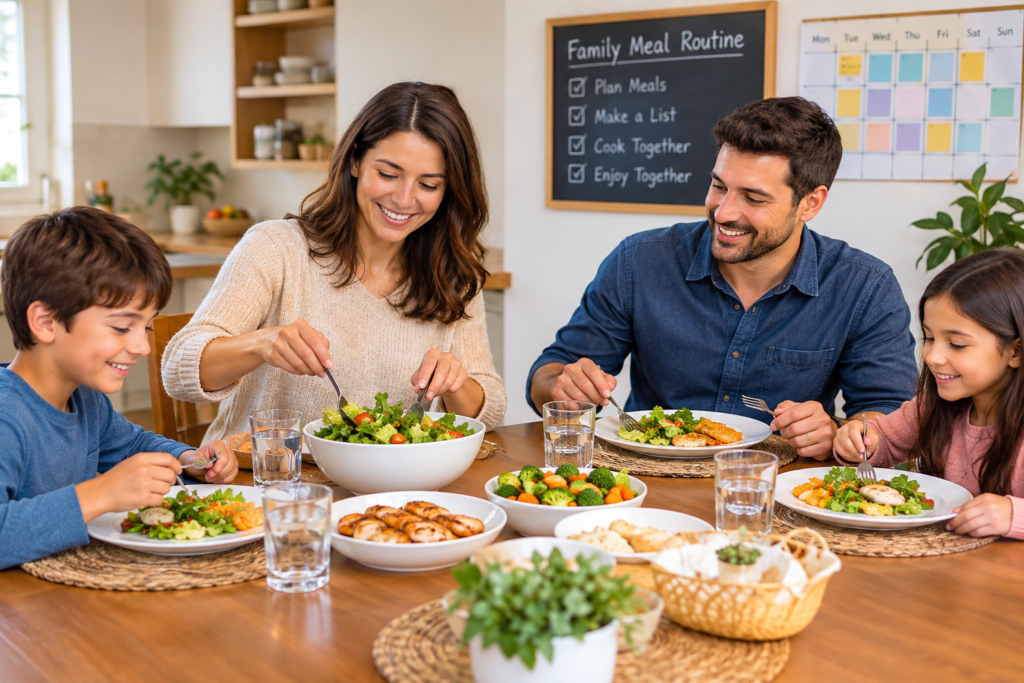
Keep Family Meals Enjoyable
One of the most important parts of a family meal routine is creating a positive atmosphere. Mealtimes should not become a daily battle over food.
Children may have different preferences, and their appetite can change from day to day. Parents can offer nutritious choices while allowing children some independence in deciding what and how much they eat.
Try using mealtime to talk about positive topics. Ask children about something interesting that happened during their day. Parents can also share their own experiences.
Simple conversations can turn an ordinary dinner into valuable family time.
Be Flexible When Life Gets Busy
No family routine works perfectly every day. There will be evenings when someone has to work late, a child has an activity, or an unexpected event changes the schedule.
This does not mean the routine has failed.
If dinner together is not possible, you can adjust the plan. Perhaps breakfast or a weekend lunch can become the shared family meal instead.
The purpose of a family meal routine is to provide structure while still allowing flexibility. A routine that is too strict may become difficult to maintain.
Prepare Food in Advance
Meal preparation can save time during busy days. You can prepare certain ingredients ahead of time without preparing every meal completely.
For example, vegetables can be washed and cut, grains can be cooked, and some ingredients can be portioned for later use.
Keeping commonly used ingredients organized can also make cooking easier.
I find that small preparation steps can make a big difference. Spending a little time preparing food when you have more free time can reduce pressure during the busiest part of the day.
Create a Family Grocery List
A family meal routine works better when your kitchen has the foods you regularly use. Creating a weekly grocery list based on your meal plan can help.
Before shopping, check what you already have. This can reduce food waste and prevent buying unnecessary items.
You can also involve older children in creating the list. They might suggest a fruit they enjoy or choose a vegetable for one of the meals.
This gives everyone a small voice in the family’s food routine.
Do Not Expect Perfection
One mistake families sometimes make is trying to create an ideal routine immediately. It is better to begin with a simple plan and improve it over time.
Maybe your first goal is to have dinner together three times a week. Once that becomes comfortable, you can decide whether to add another shared meal.
If one week does not go according to plan, simply start again the next week.
A successful family meal routine should fit real life. It should not make parents feel guilty when things do not go perfectly.
Make the Routine Easy to Remember
A visible weekly meal plan can make the routine easier for everyone. You can put a simple meal calendar on the refrigerator or another convenient place.
Write down the main meals for each day and allow room for changes.
Children can check the schedule and know what is planned. Parents can also use it when preparing groceries and organizing their time.
Over time, the routine can become a natural part of family life rather than something that requires constant planning.
Final Thoughts
Creating a family meal routine is one of the simplest ways to bring more structure and connection into everyday life. It does not require expensive food, complicated recipes, or a perfect schedule.
Start by looking at your family’s real routine. Choose realistic meal times, plan simple foods, involve children when appropriate, and make shared meals a positive experience. Most importantly, stay flexible when life becomes busy.
In my view, the best family meal routine is one that people can actually maintain. Even a few shared meals each week can create opportunities for conversation, healthy habits, and quality family time. With consistency and a little planning, family meals can become one of the most enjoyable parts of the day.