 octopushas3hearts
Related Articles



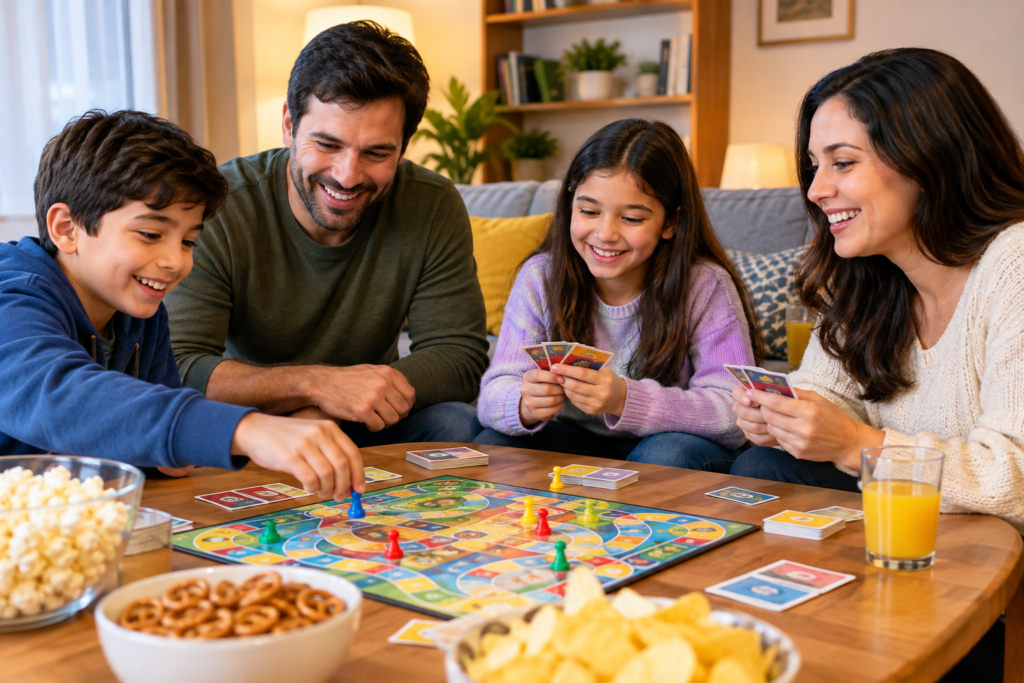
Family game night is one of the simplest ways to bring everyone together without spending a lot of money or making complicated plans. In my experience, a good family game night is not really about winning a game. It is about putting phones aside, sitting together, laughing, talking, and enjoying some quality time as a family.
With busy schedules, school responsibilities, work, household tasks, and everyday distractions, finding time for meaningful family activities can sometimes be difficult. That is why planning a regular family game night can be such a nice tradition. You can keep it simple, use games you already have at home, prepare a few snacks, and enjoy an evening that everyone can look forward to.
In this article, I will share some practical ideas on how to plan a family game night that is fun, comfortable, and suitable for different ages.
Choose a Convenient Night
The first step in planning a family game night is choosing the right day and time. There is no need to make it complicated. Pick an evening when most family members are available and do not have important responsibilities.
For many families, Friday or Saturday evening works well because children may not have school the next morning and adults can relax after a busy week. However, every family has a different schedule, so choose whatever works best for you.
I believe consistency can make family game night even more enjoyable. You could have it every Friday evening, once a month, or whenever everyone has free time. The important thing is creating a routine that feels enjoyable rather than stressful.
Decide Who Will Join
Before selecting the games, think about who will be participating. A game that works perfectly for teenagers and adults may not be suitable for younger children.
If you have a family with different age groups, choose games that allow everyone to participate. Simple board games, card games, guessing games, drawing games, and word games can often work well for mixed age groups.
It is also a good idea to let different family members choose the game on different nights. This gives everyone an opportunity to introduce their favorite game and makes the activity feel more inclusive.
Select the Right Family Games
Choosing the right family games is probably the most important part of planning a successful game night.
Start by looking at the games you already have at home. You may be surprised by how many options are available in a cupboard or storage box. Classic board games, playing cards, puzzles, trivia games, and simple strategy games can provide hours of entertainment.
When choosing a game, consider its age requirements, number of players, playing time, and difficulty level.
For younger children, choose games with simple instructions and short rounds. Older children may enjoy strategy, trivia, word, or creative games. Adults can also participate without making the game too difficult for younger family members.
If everyone enjoys the first game, you can continue playing it. If not, simply move to another activity. There is no need to force everyone to finish a game that nobody is enjoying.
Create a Comfortable Playing Area
You do not need a special room for family game night. Your living room, dining room, or even a comfortable corner of the house can work perfectly.
Clear enough space for the game, arrange comfortable chairs, and make sure everyone can easily see the board or cards.
Good lighting is also important. Nobody wants to strain their eyes while reading cards or looking at a game board.
I personally think comfort makes a big difference. When everyone has enough space and can sit comfortably, people are more likely to relax and enjoy the evening.
Prepare Some Easy Snacks
Food can make family game night feel more special. However, you do not need to prepare a complicated dinner just for the occasion.
Simple snacks are usually enough. Popcorn, fruit, sandwiches, crackers, homemade cookies, vegetable sticks, or small bowls of snacks can work well.
For drinks, you can offer water, juice, milk, or another family friendly option.
Try to keep food away from valuable game pieces whenever possible. Spilled drinks can damage cards and boards, while greasy fingers can make game pieces unpleasant to handle.
One useful idea is to create a small snack table beside the playing area. This allows everyone to grab something without placing food directly next to the game.
Put Phones and Devices Aside
One of the biggest benefits of a family game night is spending time together without constant digital distractions.
Before starting, consider creating a simple family rule that phones, tablets, and other unnecessary devices stay away from the playing area.
Of course, there may be situations where someone needs to keep a phone nearby. The goal is not to create strict rules. Instead, the goal is to give everyone a chance to focus on the people around them.
Even one uninterrupted hour of conversation and laughter can make a noticeable difference in how connected a family feels.
Set Simple Game Night Rules
Every family game night does not need a long list of rules. A few simple guidelines can help keep things enjoyable.
For example, everyone should get a fair turn, players should follow the basic rules, and disagreements should be handled calmly.
It is also helpful to remember that younger children may become frustrated when they lose. Parents can use these moments to teach children that games are about having fun, practicing patience, and enjoying time together.
I think this is one of the best parts of family games. Children can naturally learn about taking turns, following instructions, making decisions, and being respectful toward others.
Add Some Friendly Competition
A little competition can make game night exciting, but it is important to keep it friendly.
You can create small challenges between family members or keep track of points across several games. The winner could choose the next game, select the movie for family movie night, or simply receive a fun homemade certificate.
Avoid making winning the only goal. If the competition becomes too serious, some family members may stop enjoying the activity.
The best family game night is one where everyone feels comfortable participating, whether they win or lose.
Try Games That Require No Equipment
You do not always need a board game or special equipment. Some of the most entertaining family games require nothing at all.
Charades is a classic example. One person acts out a word or phrase while everyone else tries to guess it.
You can also play twenty questions, storytelling games, guessing games, memory challenges, or simple family trivia.
For a creative activity, give everyone a few minutes to draw something and then have the rest of the family guess what it represents.
These simple activities are especially useful when you want to have a family game night without buying anything.
Let Children Help With Planning
If children are involved, let them help prepare the evening.
They can choose one of the games, arrange the chairs, prepare simple snacks with adult supervision, or create homemade scorecards.
Giving children small responsibilities can make them feel excited about the event. It also teaches them that family activities are something everyone can help create.
You could even create a rotating system where one family member becomes the game night organizer each time.
Plan a Family Tournament
If your family enjoys competition, consider organizing a small tournament.
Choose three or four games and award points after each round. At the end of the evening, add the scores and announce the results.
The tournament does not need expensive prizes. Homemade certificates, stickers, choosing the next activity, or simply earning the title of family game champion can be enough.
To keep things fair, consider pairing younger children with adults when playing team games.
Make the Evening Themed
A theme can make an ordinary family game night feel different.
For example, you could have a colorful game night, a puzzle night, a trivia night, or a favorite childhood games night.
You could also choose snacks that match the theme. A simple theme does not require a lot of preparation. Even changing the snacks or selecting games around one idea can make the evening feel special.
Keep the Schedule Flexible
It is helpful to have a basic plan, but do not make the evening too rigid.
You might plan to start with one board game, take a snack break, and then play another activity. However, if everyone is having fun with the first game, there is no reason to rush.
Similarly, if a particular game is not working, move on to something else.
Family game night should feel relaxing. The plan is simply there to provide structure, not to create pressure.
Create a Regular Family Tradition
The biggest benefit of family game night comes when it becomes a regular family tradition.
You do not need to hold it every week. Even once or twice a month can give everyone something enjoyable to look forward to.
Over time, you may find that family members start suggesting games, preparing snacks, and talking about previous game nights.
These simple traditions can become memorable family experiences. Years later, people often remember the laughter, funny mistakes, unexpected victories, and conversations more than the actual games.
Final Thoughts
Learning how to plan a family game night does not require a large budget, expensive equipment, or complicated preparation. The basic ingredients are simple: choose a suitable time, select enjoyable family games, prepare some easy snacks, create a comfortable space, and give everyone a chance to participate.
In my view, the most important part is making the evening about spending time together rather than simply winning games. Put distractions aside, encourage everyone to join in, and allow plenty of room for laughter.
Whether you choose a classic board game, a card game, a trivia challenge, or a game that requires no equipment at all, a family game night can become a simple and enjoyable tradition. With a little planning and a relaxed attitude, your home can become the perfect place for family fun.