 octopushas3hearts
Related Articles



Household chores are a normal part of family life, but getting children to help around the house can sometimes feel difficult. Many parents want their kids to become responsible and independent, yet children may see chores as boring, tiring, or something they would rather avoid. In my view, the key is not to make children love every chore. The goal is to make household chores easier for kids so they can understand their responsibilities and complete them without feeling overwhelmed.
When children are given simple and age appropriate tasks, chores can become a useful part of their daily routine. They can learn responsibility, organization, time management, and basic life skills while also contributing to the family. With the right approach, even ordinary tasks such as putting away toys, folding clothes, cleaning a table, or helping with laundry can become easier.
Start With Simple Household Chores
One of the easiest ways to make household chores easier for kids is to start small. Giving a child too many responsibilities at once can make the entire process frustrating. I believe it is better to introduce one or two simple chores and allow the child to become comfortable with them.
Younger children can begin with tasks such as putting toys into a box, placing dirty clothes in a laundry basket, putting books on a shelf, or helping set the table. Older children may be able to sweep the floor, organize their room, fold clothes, or help with simple kitchen tasks.
The important thing is to match the chore with the child’s age and ability. A task should provide a little challenge without becoming impossible.
Create a Regular Chore Routine
Children usually find chores easier when they know when and how they should be done. Instead of asking children randomly throughout the day to complete different tasks, create a simple household chore routine.
For example, a child can put away toys after playing, place clothes in the laundry basket before bedtime, and help clear the table after dinner. These small habits can eventually become automatic.
A consistent routine also reduces arguments because children know what is expected of them. They do not have to constantly ask whether they need to help. The routine gives them a clear understanding of their responsibilities.
Give Clear Instructions
Sometimes children do not avoid chores because they are lazy. They may simply not understand what they are supposed to do. A general instruction such as “clean your room” can sound much bigger and more confusing than it actually is.
Instead, break the task into smaller steps. For example, ask the child to put toys in the toy box, place books on the shelf, put dirty clothes in the basket, and then arrange the bed.
Clear instructions make household chores easier for kids because they know exactly where to begin. As children become more experienced, they can gradually learn to complete larger tasks without detailed instructions.
Make Chores Feel Like Teamwork
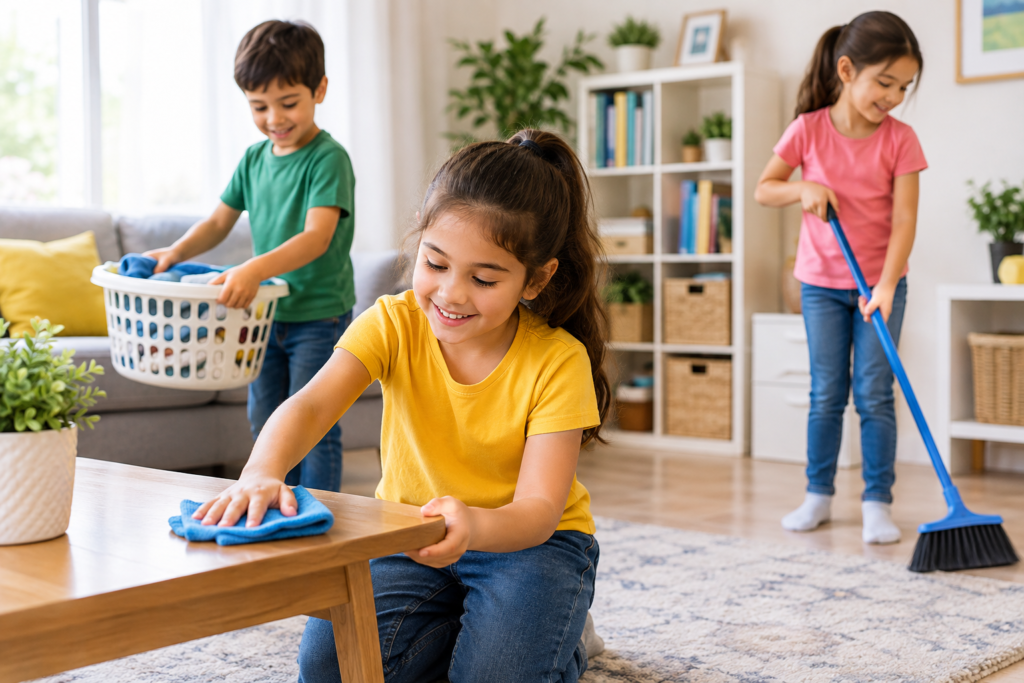
In my experience, children are often more willing to help when they feel that they are part of the family team. Instead of presenting chores as punishment, explain that everyone in the household has responsibilities.
Parents can work alongside their children while completing household tasks. One person can wipe the table while another puts dishes away. Someone can sweep while another organizes the room.
This approach can make chores more enjoyable and less stressful. It also gives parents an opportunity to teach children how different household tasks are done.
Use Child Friendly Cleaning Tools
The right tools can make a surprisingly big difference. Large or difficult cleaning equipment may be uncomfortable for children to use. Whenever possible, provide safe and child friendly tools that are suitable for their age.
A small dustpan, lightweight broom, soft cleaning cloth, laundry basket, or simple storage box can make tasks easier. Children may also feel more interested in helping when they have their own tools.
Safety should always come first. Young children should not handle dangerous cleaning chemicals, sharp objects, hot appliances, or equipment that is not appropriate for their age.
Turn Large Tasks Into Small Tasks
A large household chore can feel overwhelming to a child. One simple solution is to divide it into smaller activities.
For example, instead of asking a child to completely clean a bedroom, begin with picking up toys. Then ask the child to organize books. After that, clothes can be placed in the correct location.
This method works because children can focus on one task at a time. Completing several small tasks can also give them a sense of achievement.
Let Kids Choose Some Chores
Giving children a little control can make them more cooperative. If there are several suitable chores available, allow the child to choose between them.
For example, you might ask whether they would rather sweep the room or fold towels. Another child may prefer organizing toys instead of helping with laundry.
The choices should remain within reasonable limits, but giving children some independence can help them feel that their contribution matters.
Use a Simple Chore Chart
A chore chart can be useful for families who want to create a clear household chore routine. It does not need to be complicated. A simple chart can list each child’s responsibilities for the day or week.
For younger children, pictures can be helpful. Older children can use written lists.
A chore chart can help children remember their tasks without parents having to repeat the same instructions every day. It can also teach organization and time management.
Make Cleanup Part of Everyday Life
One of the best ways to make household chores easier for kids is to prevent small messes from becoming large ones. Teach children to clean up after themselves as part of their normal routine.
After playing with toys, they can put them away. After eating, they can take their plate to the kitchen. After changing clothes, they can place dirty clothing in the laundry basket.
These habits may seem small, but they can make a major difference over time. Children gradually learn that keeping a home organized is an ongoing responsibility rather than a huge cleaning project.
Use Encouragement Instead of Constant Criticism
Children need guidance when learning household chores. They may not complete a task perfectly at first, and that is normal.
If a child folds towels unevenly or does not clean a surface perfectly, try to focus on the effort and help them improve. Constant criticism can make children lose interest in helping.
Simple encouragement such as “Thank you for helping” or “You did a good job organizing that” can make children feel appreciated.
Praise should be honest and specific. Instead of simply saying “Good job,” you can say, “I appreciate how you put all your books back on the shelf.”
Keep Chores Age Appropriate
Not every household chore is suitable for every child. Parents should consider a child’s age, physical ability, maturity, and understanding before assigning a task.
Younger children can help with simple organizing and tidying. School age children can usually take on more responsibilities, while teenagers can handle more complex household tasks.
The purpose of chores is to teach responsibility and independence, not to place unreasonable pressure on children.
Add Fun Where Possible
Household chores do not always have to feel serious. Adding a little fun can encourage children to participate.
Parents can play music while cleaning, use a timer for short cleanup sessions, or turn organizing into a simple challenge. For example, children can see how quickly they can put their toys away while still doing the job properly.
The idea is not to turn every chore into a game. Instead, occasional fun can make repetitive household tasks feel less boring.
Teach Children How to Do the Chore
Parents sometimes expect children to know how to complete a task simply because they have seen adults doing it. However, watching someone clean is not the same as knowing how to clean.
Take time to demonstrate each new chore. Show your child how to fold a towel, sweep a floor, organize a shelf, or wipe a table safely.
At first, you may need to work alongside them. With practice, children can gradually complete the task independently.
Avoid Making Chores a Punishment
I think it is important to avoid using normal household chores as punishment whenever possible. If children begin to associate cleaning with being in trouble, they may develop a negative attitude toward helping at home.
Instead, present chores as normal family responsibilities. Children can understand that everyone contributes to keeping the home comfortable and organized.
Discipline can be handled separately from everyday responsibilities.
Be Patient When Kids Learn
Learning household chores takes time. Children will make mistakes, forget tasks, and sometimes need reminders. Parents should expect this as part of the learning process.
The goal is not immediate perfection. The goal is to gradually develop useful habits.
If a child struggles with a particular task, consider whether the chore is too difficult or whether the instructions need to be clearer. Sometimes a small adjustment is enough to make the activity much easier.
Teach Responsibility Through Daily Habits
Household chores are more than cleaning activities. They can help children understand responsibility in everyday life.
When children regularly complete small tasks, they learn that their actions affect other people. They begin to understand that a clean and organized home requires cooperation from everyone.
These lessons can become useful later in life. A child who learns how to organize belongings, care for personal spaces, manage simple cleaning tasks, and contribute to the household is developing practical skills that can support independence.
Final Thoughts
Making household chores easier for kids does not require complicated systems. In my opinion, the most effective approach is to keep tasks simple, provide clear instructions, create a regular routine, and give children enough time to learn.
Parents should remember that children are still developing their skills. A chore that seems easy to an adult may be new and challenging for a child. Patience, encouragement, and consistency can make the learning process much smoother.
When household chores become a normal part of family life, children can gradually become more responsible and independent. Instead of seeing chores as an unwanted burden, they can learn that helping at home is simply one way every family member contributes.
With age appropriate responsibilities, child friendly tools, clear expectations, and positive encouragement, household chores can become easier for kids and more manageable for parents too.