 octopushas3hearts
Related Articles


Spending time together as a family does not always require an expensive vacation or a complicated plan. In my experience, some of the best family memories come from simple outdoor activities that give everyone a chance to relax, laugh, play, and enjoy each other’s company. Whether you have young children or older kids, there are plenty of fun outdoor activities for families that can turn an ordinary day into something special.
Outdoor family activities are also a great way to take a break from phones, televisions, computers, and busy daily routines. Fresh air, movement, sunshine, and time together can make a noticeable difference in everyone’s mood. The best part is that many outdoor activities can be enjoyed with little or no cost.
1. Go for a Family Walk
A family walk is one of the easiest outdoor activities to organize. You do not need special equipment or a large budget. You can simply walk around your neighborhood, visit a local park, or choose a safe nature trail.
I like family walks because they can be enjoyed by almost everyone. Younger children can look for interesting plants, flowers, birds, or insects while parents can enjoy a peaceful conversation.
To make a simple walk more exciting, turn it into a small adventure. Ask children to find five different types of leaves or spot three different birds. These little challenges can make walking much more interesting for kids.
2. Have a Family Picnic
A picnic is another classic idea when looking for fun outdoor activities for families. Pack some sandwiches, fruit, snacks, water, and a blanket, then head to a nearby park or outdoor space.
The food does not have to be fancy. In fact, simple homemade food can make the experience feel more personal. You can also involve children in preparing the picnic by letting them choose snacks or help pack the basket.
After eating, families can play games, talk, read books, or simply relax. I think the most valuable part of a picnic is not the food itself but having uninterrupted family time.
3. Play Outdoor Games
Outdoor games can keep both children and adults active. Depending on the available space, families can play football, cricket, badminton, catch, volleyball, or simple running games.
You can also create your own family games. For example, divide everyone into teams and organize a friendly competition. Keep the rules simple and focus more on having fun than winning.
Outdoor games are particularly useful for children because they encourage physical activity while allowing them to develop coordination, teamwork, and communication skills.
4. Explore Nature
Nature exploration can turn an ordinary afternoon into a learning experience. Visit a forest, park, garden, lake, or other safe natural area and encourage children to observe their surroundings.
You can look at different plants, listen to birds, collect fallen leaves, or photograph interesting sights. Children often become curious when they are allowed to explore instead of simply being told what to do.
Parents can also use these opportunities to teach children about respecting nature. Explain why they should avoid damaging plants, disturbing animals, or leaving trash behind.
5. Go Cycling Together
Cycling is a fun way to combine exercise and family time. If everyone in the family knows how to ride safely, choose a suitable cycling path or quiet area where you can ride together.
For families with young children, safety should always come first. Helmets should fit properly, and the cycling location should be appropriate for the children’s abilities.
You do not need to plan a long journey. Even a short ride followed by a snack or rest can become an enjoyable family outing.
6. Organize a Backyard Treasure Hunt
You do not need to leave home to enjoy exciting outdoor activities. A backyard or garden can become the setting for a simple treasure hunt.
Parents can hide small objects and prepare clues for children to follow. The clues can involve simple questions, pictures, or directions.
For example, one clue might ask children to look near a particular plant or under a garden chair. Older children can help create clues for younger siblings.
A treasure hunt encourages problem solving, teamwork, movement, and creativity. It can also be changed regularly so that children do not get bored.
7. Try Gardening as a Family
Family gardening is both relaxing and educational. Even if you only have a small outdoor space, you can grow herbs, flowers, or vegetables in pots.
Give each family member a small responsibility. One person can prepare the soil, another can plant seeds, and someone else can water the plants.
I believe gardening is especially valuable for children because it teaches patience. They learn that plants need time, water, sunlight, and care before they produce results.
Watching a small seed eventually become a healthy plant can be a surprisingly rewarding family experience.
8. Plan a Nature Scavenger Hunt
A scavenger hunt is an easy way to make outdoor exploration more interactive. Before leaving home, create a list of things the family might find.
The list could include a yellow flower, a smooth stone, a bird, a pinecone, a large leaf, or an interesting cloud shape.
Instead of collecting everything, you can ask children to take photographs or simply point out what they find. This is a good approach when visiting places where removing natural objects is not appropriate.
The activity keeps children engaged and gives everyone a reason to pay closer attention to their surroundings.
9. Spend an Evening Stargazing
Stargazing is one of the simplest outdoor family activities and can create a peaceful evening together. Choose a safe outdoor location with a clear view of the sky and, if possible, limited artificial light.
Bring comfortable chairs or a blanket and let everyone look for stars, the moon, and recognizable constellations.
Children may have many questions about space, which can lead to interesting conversations. You can also use a beginner friendly astronomy guide or suitable educational app to identify objects in the sky.
There is no need to make the activity complicated. Sometimes simply lying on a blanket and looking upward is enough.
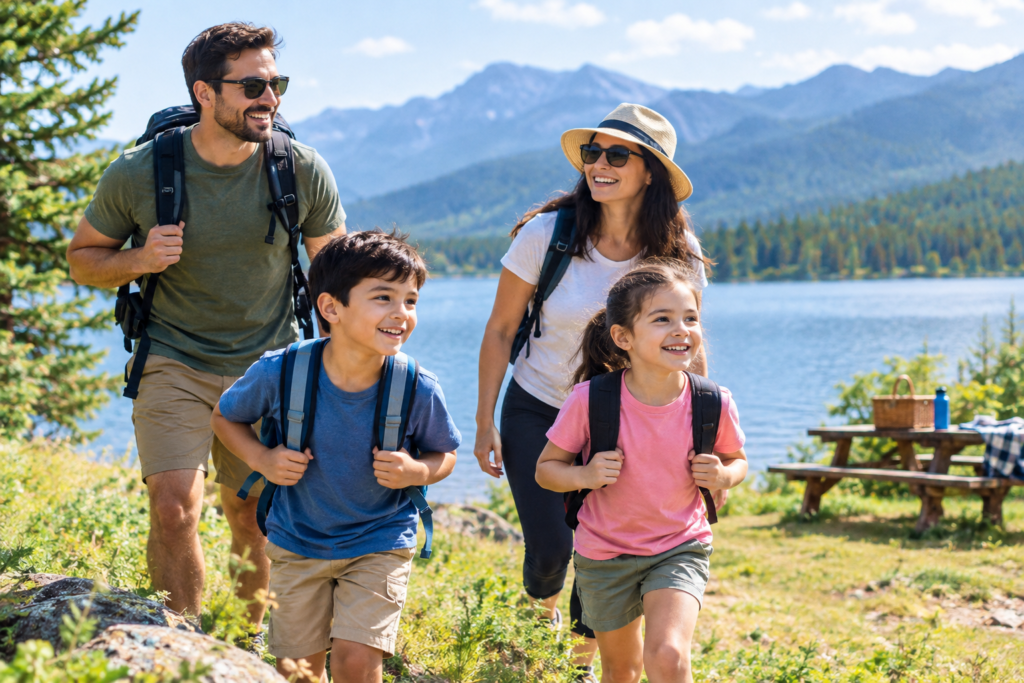
10. Go on a Family Hike
For families who enjoy a little more adventure, hiking can be an excellent choice. Choose a trail that matches the ages and fitness levels of everyone in the family.
A family hike does not have to be difficult. A short trail with interesting scenery may be more enjoyable than a long and tiring route.
Pack enough water, appropriate snacks, comfortable clothing, and basic supplies. Check local conditions before heading out, especially if the weather can change quickly.
The goal should be enjoying the journey rather than reaching a particular distance.
11. Fly a Kite
Flying a kite is an old fashioned activity that can still provide plenty of fun. Find a suitable open area away from roads, power lines, and other hazards.
Children can help assemble the kite and learn how wind affects its movement. Adults can join in as well, making it a shared activity rather than something only children enjoy.
When the kite finally gets high into the sky, there is a simple sense of achievement that makes the activity memorable.
12. Have an Outdoor Art Day
Outdoor creativity is another wonderful way to spend family time. Take drawing paper, pencils, crayons, or washable paints outside and encourage everyone to create something inspired by nature.
Children might draw trees, flowers, clouds, animals, or their favorite outdoor memory.
You can also use natural scenery as inspiration without damaging plants or disturbing wildlife. The focus should be on creativity rather than making perfect artwork.
13. Visit a Local Park
Sometimes the simplest idea is the most practical. A local park may offer playgrounds, walking paths, open fields, and enough space for different activities.
Instead of allowing children to spend the entire visit on one activity, try combining several. Start with a walk, play a game, have a snack, and finish with some quiet time.
This approach keeps the outing interesting without requiring complicated planning.
14. Plan an Outdoor Family Fitness Session
Families can also exercise together outdoors. You can create a simple routine involving walking, stretching, jogging, jumping, or other age appropriate movements.
Keep the session light and enjoyable. You could even turn exercise into a game by setting small challenges for everyone.
The important thing is to choose activities that are suitable for each family member. Outdoor exercise should feel positive rather than like a punishment.
How to Make Outdoor Family Activities More Enjoyable
The success of a family outing often depends more on planning than on the activity itself. I have found that keeping expectations realistic makes outdoor time much more enjoyable.
First, choose an activity that matches everyone’s age and energy level. A small child may enjoy a short nature walk, while older children may prefer cycling or hiking.
Second, check the weather before leaving. Bring water, sunscreen, hats, suitable clothing, and anything else needed for the conditions.
Third, avoid overplanning. It is tempting to fill every minute with activities, but families also need time to relax and talk.
Finally, put phones away whenever practical. Taking a few photographs is fine, but constantly checking screens can take attention away from the people around you.
Why Outdoor Family Activities Matter
Regular outdoor activities can provide families with more than entertainment. They create opportunities for communication, physical movement, creativity, learning, and shared experiences.
Children also benefit from having time to explore their surroundings and try activities away from screens. Parents can benefit too because outdoor family time provides a natural opportunity to slow down and reconnect.
Most importantly, you do not need expensive equipment or a large budget. A walk, picnic, game, garden activity, or visit to a local park can be enough.
Final Thoughts
There are countless fun outdoor activities for families, and the best choice is usually the one that everyone can enjoy together. You can go for a walk, have a picnic, play games, explore nature, ride bicycles, garden, fly a kite, or simply spend an evening looking at the stars.
From my point of view, the real value of these activities is not how impressive the outing looks. It is the time families spend together. Simple outdoor experiences often become the memories that children remember for years.
So, instead of waiting for a special holiday or expensive trip, choose a free afternoon, step outside, and try something together. A little creativity can turn an ordinary day into a meaningful family adventure.