 octopushas3hearts
Related Articles
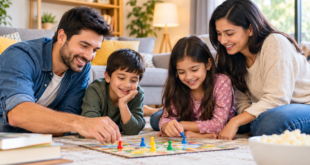


I believe learning does not have to happen only in a classroom. Some of the most useful lessons children learn can happen at home while they are playing, asking questions, helping parents, or simply exploring something new. When parents join these activities, learning can become more enjoyable and meaningful for children.
Fun educational activities for kids can improve creativity, communication, problem solving, memory, and general knowledge. The best part is that parents do not always need expensive toys or special equipment. Many simple activities can be created with things already available at home.
In this article, I am sharing some fun educational activities parents can do with kids. These ideas are simple, practical, and suitable for different ages and interests.
1. Read Stories Together
Reading together is one of the easiest educational activities for kids. Choose a storybook that matches your child’s age and interests, then spend some quiet time reading together.
Instead of only reading the words, ask questions about the story. Ask your child what they think will happen next, why a character made a certain decision, or what they would do in the same situation.
This activity can improve vocabulary, listening skills, imagination, and comprehension. I also think reading together gives parents a wonderful opportunity to understand what their children are thinking.
For younger children, picture books can be especially useful. Ask them to describe the pictures and identify objects, animals, shapes, and colors.
2. Create a Home Science Experiment
Children naturally enjoy discovering how things work. Simple science experiments can turn an ordinary afternoon into an interesting learning experience.
For example, parents can demonstrate how objects float or sink using a bowl of water and safe household objects. Children can make predictions before placing each object in the water and then compare their predictions with the results.
Another simple activity is observing how ice changes when it is left at room temperature. Ask your child why the ice melts and what happens when water becomes warmer.
The purpose is not to give children complicated scientific information. Instead, encourage them to observe, ask questions, make predictions, and explain what they see.
3. Practice Math While Cooking
Cooking can become a practical math lesson. Parents can involve children when measuring ingredients, counting items, comparing quantities, or dividing food into portions.
For example, if a recipe requires two cups of flour, ask your child to help measure it. Older children can practice fractions by discussing half a cup, one quarter, or doubling a recipe.
You can also ask simple questions such as how many eggs are needed if the recipe is made twice.
I find this type of learning particularly useful because children can see how math is connected to everyday life. It feels less like studying and more like helping with an important family task.
4. Make a Homemade Puzzle
Parents can create simple puzzles using paper, cardboard, or old magazines. Draw a picture, cut it into several pieces, and ask your child to put it back together.
You can make the puzzle easier or more challenging depending on your child’s age.
Puzzles encourage concentration, visual thinking, patience, and problem solving. They also give children a chance to experience the satisfaction of completing something independently.
For older children, parents can create word puzzles, number puzzles, or simple logic challenges.
5. Go on a Nature Walk
A nature walk is a great way to combine outdoor activity with education. You can take your child to a garden, park, or another safe outdoor area and encourage them to observe their surroundings.
Ask children to identify different plants, leaves, insects, birds, or types of trees. You can discuss colors, shapes, textures, and sounds.
For older children, you can turn the walk into a small nature research project. They can write down what they see and later look up information about different plants or animals with parental guidance.
This activity can develop observation skills while helping children become more interested in the natural world.
6. Play Educational Board Games
Educational board games can make learning feel like entertainment. Depending on the child’s age, parents can choose games involving numbers, spelling, memory, geography, matching, or strategy.
Board games also teach important social skills. Children learn how to follow rules, wait for their turn, communicate, and handle both winning and losing.
Parents can make the activity more educational by asking questions during the game. For example, a geography game can become an opportunity to discuss countries and cultures.
The important thing is to keep the atmosphere relaxed. Children usually learn more when they are enjoying themselves.
7. Build Something With Blocks
Building blocks are excellent tools for creative learning. Give children blocks, building pieces, or other safe construction toys and allow them to create something.
You can suggest challenges such as building a house, bridge, tower, or vehicle.
This type of play develops creativity and spatial awareness. Children also learn basic concepts related to balance, structure, size, and design.
Parents should avoid taking control of the project. Let children experiment and make mistakes. Sometimes the most valuable learning happens when a child discovers why a particular design does not work.
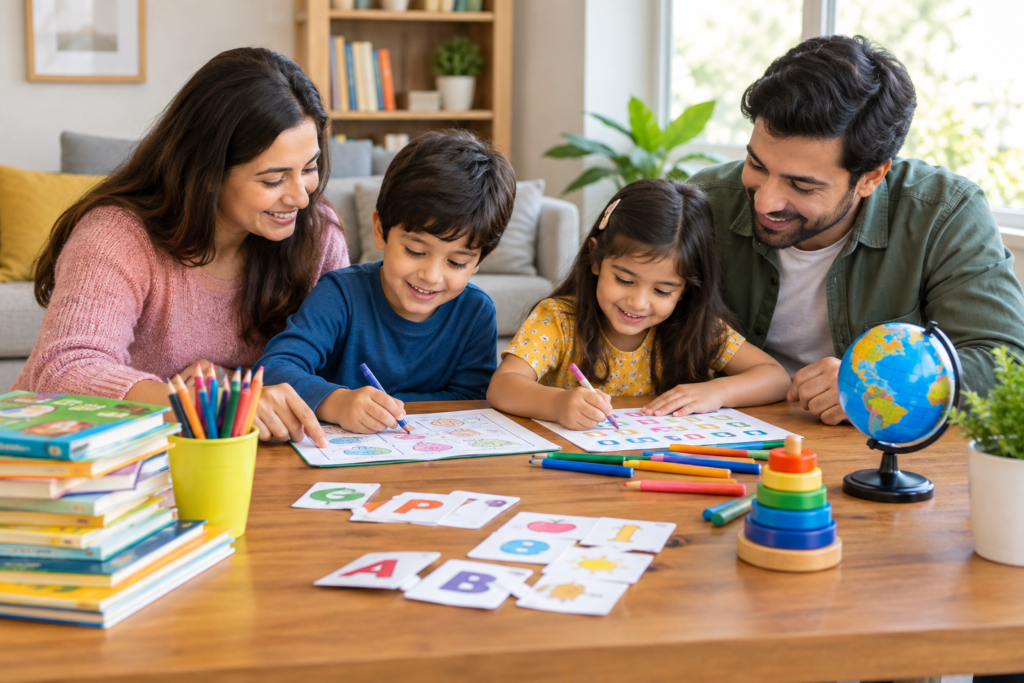
8. Create a Family Quiz
A family quiz can be both educational and entertaining. Parents can prepare questions about animals, science, geography, history, books, numbers, or general knowledge.
Make the questions appropriate for the child’s age. Younger children can answer questions about colors, shapes, animals, and basic numbers, while older children can handle more challenging topics.
You can also allow children to create questions for their parents. This encourages them to research information and think about how to explain a question clearly.
A family quiz can become a regular weekend activity that everyone looks forward to.
9. Start a Small Garden
Gardening teaches children about nature, responsibility, patience, and growth. You do not need a large garden. A few pots or containers can be enough.
Let children help plant seeds, add soil, water plants, and observe changes.
Parents can explain that plants need water, light, air, and suitable soil to grow. Children can keep a simple growth journal and record changes each week.
This activity can also introduce basic measurement. Children can measure the height of a plant and compare it with its previous measurements.
10. Make an Art Project
Art is not only about creating something beautiful. It can also help children develop creativity, coordination, and self expression.
Give children paper, pencils, crayons, colored markers, or other safe art supplies. Ask them to draw a favorite animal, design an imaginary house, create a family picture, or illustrate a story they recently read.
Parents can participate without judging the final result.
Instead of saying whether a drawing looks good or bad, ask children to explain their ideas. This encourages communication and gives them confidence in their creativity.
11. Practice Writing With a Family Journal
A family journal can be a simple notebook where children write or draw something regularly.
You can ask younger children to draw their favorite part of the day. Older children can write a few sentences about what they learned, what they enjoyed, or something interesting they noticed.
Parents can also write short entries. This turns the journal into a shared family activity.
Regular writing can improve vocabulary, spelling, sentence formation, and communication skills. It also creates a record of family memories.
12. Play Memory Games
Memory games are simple educational activities that can be played almost anywhere. Place several familiar objects on a table and allow your child to look at them for a short time. Then cover the objects and ask the child to remember as many as possible.
You can make the activity more difficult by increasing the number of objects or changing their positions.
Another option is using homemade matching cards. Create pairs of pictures or words and place them face down. Players take turns trying to find matching pairs.
These games can encourage concentration, observation, and memory.
13. Have a Geography Day
Parents can introduce children to geography through maps, globes, books, and simple discussions.
Choose a country and learn a few interesting facts about it. Talk about its location, language, food, famous places, animals, or climate.
You can also ask children to find different countries on a map. For younger children, start with continents and oceans.
Geography activities can help children understand that the world is made up of many different places and cultures.
14. Turn Cleaning Into a Learning Activity
Even household chores can become educational. Children can practice sorting, counting, organizing, and following instructions while helping around the house.
For example, ask a child to sort objects by size or color. Older children can help organize books alphabetically or count household items.
Parents can also introduce basic time management by giving children a simple task and asking them to estimate how long it might take.
The goal is not to make every chore feel like school. Instead, it is about helping children recognize that learning can happen during normal daily activities.
15. Tell Stories Together
Storytelling is another wonderful activity for developing imagination and communication skills.
Parents can begin a story with a few sentences and then ask the child to continue it. You can take turns adding characters, events, and locations.
For example, you might start with a story about a child who discovers a mysterious box in the garden. Then ask your child what is inside the box and what happens next.
This activity encourages creativity, vocabulary, listening, and logical thinking. It can also lead to lots of laughter and memorable family moments.
How Parents Can Make Learning More Enjoyable
In my view, the biggest mistake parents can make is putting too much pressure on educational activities. Children are naturally curious, but they can lose interest when every activity feels like an examination.
Keep activities short when children are young. Give them choices whenever possible. If a child is interested in animals, use animals as the theme for reading, counting, drawing, and science activities.
Parents should also allow children to make mistakes. Mistakes are an important part of learning because they encourage children to try different approaches.
Most importantly, participate with enthusiasm. When children see their parents enjoying an activity, they are often more willing to participate.
Conclusion
Fun educational activities parents can do with kids do not need to be complicated or expensive. Reading stories, cooking together, playing games, gardening, creating art, exploring nature, and building things can all become valuable learning experiences.
What matters most is creating an environment where children feel comfortable asking questions and exploring ideas. Parents do not have to know the answer to every question. Sometimes saying, “Let us find out together,” can make learning even more exciting.
From my point of view, the best educational activities are the ones that combine learning with family time. When children associate learning with curiosity, creativity, and positive experiences, education can become something they enjoy rather than something they simply have to complete.
SEO Information
Primary Keyword: Fun Educational Activities Parents Can Do With Kids
Secondary Keywords: educational activities for kids, fun learning activities for children, parent child activities, educational games for kids, learning activities at home, family educational activities