 octopushas3hearts
Related Articles


I believe that a child’s home is much more than a place where they eat, sleep, and complete their daily routines. Home is the first environment where children learn about love, respect, communication, confidence, responsibility, and relationships. The atmosphere we create at home can have a lasting effect on how children understand themselves and the world around them.
Creating a positive home environment for children does not mean having a perfect house or making every day completely peaceful. Every family experiences stress, disagreements, busy schedules, and difficult moments. What matters is how we handle those moments and whether children continue to feel safe, respected, and loved.
From my point of view, positive parenting begins with creating a home where children know that they matter. Small changes in our daily behavior can make a big difference. Here are some practical ways I believe parents can create a happy, healthy, and supportive home environment for their children.
Make Home Feel Safe and Comfortable
The first step toward creating a positive home environment for children is making them feel safe. Children need to know that home is a place where they can relax and express themselves without constantly worrying about being shouted at or criticized.
Safety is not only about protecting children from physical harm. Emotional safety is equally important. When children make mistakes, parents should try to correct their behavior without making them feel that they are bad or unwanted.
I believe simple words such as “I understand,” “Let us solve this together,” or “It is okay to make mistakes” can help children feel supported. When children feel emotionally secure, they are more likely to communicate openly with their parents.
Spend Quality Time Together
One of the easiest ways to create a positive home environment is to spend meaningful time together. Children do not always need expensive toys, trips, or entertainment. Often, they simply want our attention.
I have found that ordinary activities can become special family moments. Eating dinner together, reading a story, playing a board game, helping with cooking, or talking before bedtime can strengthen the connection between parents and children.
The important thing is to give children our full attention whenever possible. Putting away the phone for a few minutes and listening carefully can show a child that their thoughts and feelings are valuable.
Encourage Open Communication
Good communication is an important part of a happy family environment. Children should feel comfortable talking about their feelings, problems, questions, and experiences.
Instead of immediately judging or correcting them, I believe parents should listen first. Sometimes a child does not need an immediate solution. They simply need someone who understands what they are trying to say.
Parents can encourage communication by asking simple questions such as “How was your day?” or “What was the best part of today?” These questions can gradually create a habit of conversation.
It is also important to accept that children may not always communicate in the same way adults do. Younger children may express emotions through behavior, while older children may need more privacy. Understanding their communication style can make family relationships stronger.
Create Simple Family Routines
Children usually feel more comfortable when they know what to expect. Simple family routines can provide structure without making home feel overly strict.
A regular bedtime, meal schedule, homework time, and morning routine can help children develop healthy habits. Routines also teach responsibility and time management.
I do not think every minute of a child’s day needs to be planned. Children also need free time to play, explore, imagine, and relax. A good routine should provide structure while still leaving room for flexibility.
Keep the Home Respectful
Respect should begin at home. Children learn a great deal by watching how adults treat one another.
If parents communicate calmly, listen to each other, apologize after mistakes, and show appreciation, children are more likely to learn those behaviors naturally.
This does not mean parents will never disagree. Disagreements are normal in families. What matters is how they are handled.
I believe parents should avoid insulting, humiliating, or threatening children. Discipline can be firm while still being respectful. Children need boundaries, but they also need to understand that discipline does not reduce their value as a person.
Encourage Children Instead of Comparing Them
Every child develops differently. Some children are naturally confident, while others need more encouragement. Some are good at sports, while others enjoy reading, drawing, building, or solving problems.
Comparing children with siblings, classmates, relatives, or friends can create unnecessary pressure. Instead, I believe parents should focus on individual progress.
Instead of saying, “Why can you not be like your brother?” it is more helpful to say, “I can see that you are improving.”
Positive encouragement does not mean praising everything a child does. It means recognizing effort, progress, patience, creativity, and responsible behavior.
Give Children Age Appropriate Responsibilities
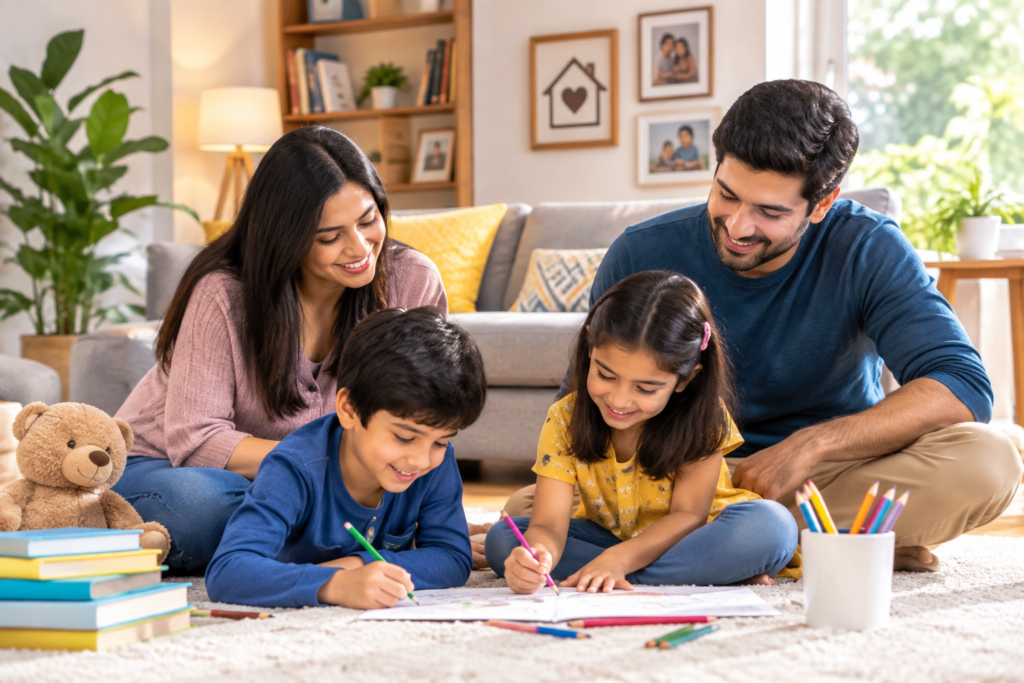
A positive home environment should also help children become independent. Giving children simple responsibilities teaches them that they are an important part of the family.
Young children can put away their toys, organize their books, or help set the table. Older children can help with household tasks that are appropriate for their age.
I believe responsibilities should be presented as part of family life rather than as punishment. When children contribute at home, they can develop confidence and a stronger sense of responsibility.
Make Time for Play
Play is an important part of childhood. Children learn through imagination, movement, experimentation, and interaction.
Parents do not always need to organize complicated activities. Sometimes a box of building blocks, some drawing materials, a ball, or a simple game can keep children engaged.
I also think parents should allow children to experience boredom occasionally. Children can learn to create their own games and activities when they are not constantly entertained by screens.
A home that allows children to play, explore, and make age appropriate choices can support creativity and independence.
Set Healthy Technology Boundaries
Technology is now a normal part of family life, but children still need balance. Phones, tablets, computers, and television can be useful, but too much screen time can take away from sleep, physical activity, family conversations, and other important experiences.
Instead of treating technology as completely good or bad, I believe parents should create reasonable boundaries.
For example, families can establish screen free times during meals or before bedtime. Parents can also encourage children to balance screen activities with reading, outdoor play, creative activities, and family time.
Most importantly, adults should also consider their own screen habits. Children often copy what they see.
Create a Positive Learning Space
A positive home environment should support learning without making children feel constant academic pressure.
Children need a quiet and comfortable place where they can read, complete homework, draw, or work on projects. It does not need to be expensive or complicated. Even a small organized corner can become a useful learning space.
Parents can support learning by showing interest in what children are studying. Asking them to explain something they learned can turn education into a conversation rather than another task.
I believe parents should also teach children that mistakes are a natural part of learning. A child who is afraid of making mistakes may eventually become afraid of trying new things.
Teach Children About Emotions
Children experience many emotions, but they do not always know how to understand or express them.
Parents can help by giving emotions names. Words such as happy, sad, angry, worried, disappointed, excited, and frustrated can help children explain what they are feeling.
When a child is upset, I believe the goal should not always be to make the emotion disappear immediately. Instead, parents can help children understand what happened and learn healthy ways to respond.
Teaching emotional awareness at home can help children develop better communication and coping skills as they grow.
Show Affection Every Day
Children need to know that they are loved. Affection can be expressed in many ways depending on the child and family.
A hug, kind words, a smile, a bedtime conversation, or simply sitting together can communicate love.
I believe parents should not assume that children automatically know they are loved. Saying “I love you,” “I am proud of your effort,” or “I am happy you are here” can have a powerful effect.
Small moments of affection can become important memories for children.
Practice What You Want Children to Learn
One of the biggest lessons I have learned about parenting is that children watch more than they listen. We can tell children to be patient, respectful, honest, and kind, but our behavior often teaches them more than our instructions.
If we want children to communicate respectfully, we should communicate respectfully with them. If we want them to apologize after making mistakes, we should also be willing to apologize.
Parents do not need to be perfect role models. In fact, showing children that adults can make mistakes, accept responsibility, and try again can be a valuable lesson.
Handle Mistakes With Patience
Every child makes mistakes. Spilled drinks, forgotten homework, broken toys, arguments, and messy rooms are all part of growing up.
A positive home environment does not mean ignoring poor behavior. It means correcting it in a way that teaches rather than simply punishes.
I believe parents should explain what went wrong, discuss the consequences when appropriate, and help children understand how they can make a better choice next time.
Patience is not always easy, especially after a long or stressful day. But taking a moment to calm ourselves before responding can prevent many unnecessary arguments.
Final Thoughts
Creating a positive home environment for children is not about creating a perfect family. It is about creating a place where children feel loved, safe, respected, heard, and encouraged.
From my point of view, the most meaningful changes are often the simplest ones. Listening when a child wants to talk, eating together, setting healthy boundaries, encouraging effort, showing affection, and treating mistakes as opportunities to learn can gradually transform the atmosphere at home.
Children do not need perfect parents. They need parents who care, communicate, guide them, and continue learning alongside them.
A positive home environment is built through everyday actions. When we consistently create space for love, respect, communication, play, learning, and emotional support, we give children a strong foundation for growing into confident and responsible individuals.
The goal is not to make every day perfect. The goal is to make home a place where children know they belong.