 octopushas3hearts
Related Articles
When we think about children learning, we often imagine classrooms, books, worksheets, and teachers explaining different subjects. However, from my point of view, some of the most meaningful learning happens outside the classroom. Children learn through everyday activities while playing, helping their parents, talking with family members, exploring nature, and even doing simple household tasks.
Everyday activities give children opportunities to observe what is happening around them and understand how things work. These experiences can help develop language, problem solving, creativity, social skills, physical coordination, and independence. The best part is that parents and caregivers do not always need expensive toys or complicated learning materials. Simple daily experiences can become valuable learning opportunities.
In this article, I will discuss how children learn through everyday activities and why these ordinary moments can play an important role in childhood development.
Why Everyday Activities Are Important for Children
Children are naturally curious. They want to know why things happen, how objects work, and what they can do with the world around them. Everyday activities give them a safe way to explore these questions.
For example, when a child helps prepare food, they may learn about different ingredients, colors, shapes, quantities, and textures. When they help organize toys, they can learn about sorting and classification. When they water plants, they can begin to understand that living things need care.
In my opinion, learning becomes more interesting for children when they can connect it with something they experience in real life. Instead of simply memorizing information, children can see and experience concepts directly.
This type of learning also allows children to repeat activities. Repetition is important because children often need several experiences before they fully understand a new idea.
Learning Through Play
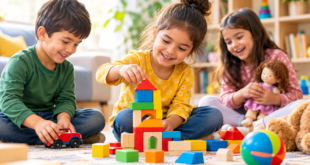
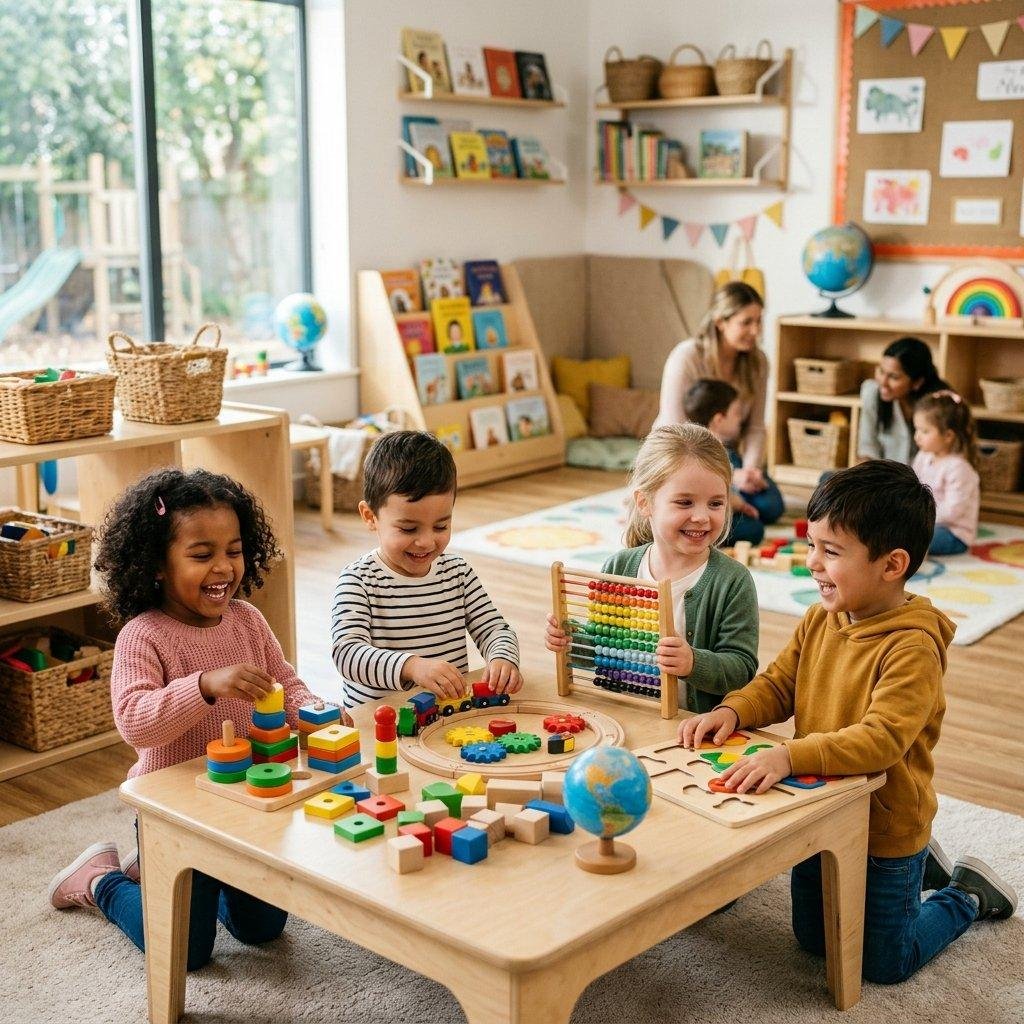
Play is one of the most natural ways children learn. Whether they are building with blocks, pretending to cook, playing with dolls, drawing pictures, or creating games with other children, they are developing different skills.
Building blocks can introduce children to balance, shapes, sizes, and basic problem solving. A child may try several times to build a tower before discovering how to make it stable. During this process, the child is learning through trial and error.
Pretend play can also support language and social development. When children pretend to be doctors, teachers, shopkeepers, or parents, they practice communication and learn about different roles.
I believe parents should give children enough time for free play instead of trying to control every part of their activity. Children often learn valuable lessons when they are allowed to explore and make their own decisions.
Learning Through Cooking and Food Preparation
The kitchen can be a wonderful learning environment when children are given age appropriate tasks under proper supervision.
Children can learn simple mathematics while counting fruits, measuring ingredients, or dividing food into portions. They can learn vocabulary by naming ingredients and discussing different tastes, smells, and textures.
Cooking can also teach children about following instructions. For example, a simple recipe has a sequence of steps. Children can learn that completing one step before another can affect the final result.
Food preparation can also encourage healthy eating habits. When children participate in preparing food, they may become more interested in trying different fruits, vegetables, and other nutritious foods.
Parents should always consider safety and give children tasks that are suitable for their age. Activities involving hot surfaces, sharp objects, or electrical appliances should be handled by adults.
Learning Through Household Chores
Household chores are another simple way children can learn important life skills. Tasks such as putting toys away, folding clothes, arranging books, or helping set the table can teach responsibility.
For younger children, even a small task can be meaningful. They may learn that every object has a place and that keeping an area organized requires effort.
Older children can gradually take responsibility for more complicated tasks. These activities can help them become more independent and confident.
From my perspective, parents should not expect children to perform household tasks perfectly. The main purpose is to help children participate and learn. Mistakes are also part of the learning process.
Learning Through Shopping
A trip to a grocery store can become an educational experience without feeling like a formal lesson.
Parents can ask children to identify different fruits and vegetables, compare sizes, count items, or recognize numbers on price labels. Older children can learn about budgeting by discussing how much different products cost.
Shopping can also develop decision making skills. Parents can give children simple choices and ask them to explain why they selected something.
These conversations help children connect mathematics and communication skills with real life situations.
Learning Through Nature
Outdoor activities provide children with opportunities to explore the natural world. A walk in a garden, park, or neighborhood can encourage children to observe plants, insects, birds, clouds, and changes in weather.
Parents can ask simple questions such as what color a flower is, how many leaves a plant has, or what sounds they can hear. These questions encourage children to observe carefully.
Gardening can be particularly useful. When children plant seeds and watch them grow, they can begin to understand that living things require water, sunlight, nutrients, and care.
Nature activities can also encourage curiosity about science. Children may ask why leaves change color, why some insects fly, or why plants grow differently in different places.
Learning Through Reading and Conversation
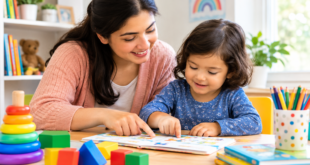
Reading does not have to happen only during a scheduled study period. Parents can make reading part of everyday life by reading stories before bedtime, looking at picture books, or discussing signs and labels.
Conversations are equally important. When parents talk with children and listen carefully to their questions, children learn new words and ways of expressing their thoughts.
For example, while traveling, parents can talk about places they pass, animals they see, or activities happening around them. These conversations introduce new vocabulary and ideas naturally.
Asking open ended questions can make conversations more meaningful. Instead of asking only questions that have a yes or no answer, parents can ask children what they think might happen next or why they believe something happened.
Learning Through Art and Creativity
Creative activities such as drawing, coloring, painting, cutting paper, and making simple crafts can support childhood learning in many ways.
Art gives children a chance to express their ideas and emotions. It can also strengthen fine motor skills because children practice controlling pencils, crayons, brushes, and other materials.
I think parents should avoid focusing too much on whether a child’s drawing looks perfect. Creativity is more valuable when children feel free to experiment.
Giving children different materials can encourage them to discover new possibilities. An empty cardboard box, for example, can become a house, car, shop, or robot during imaginative play.
Learning Through Cleaning and Organizing
Cleaning may not sound like a learning activity, but it can teach several useful skills. Children can learn to categorize objects, follow instructions, complete tasks, and take responsibility for their environment.
Parents can turn organization into a simple game. For example, children can sort toys according to color, size, or type.
These activities introduce early mathematical concepts such as classification and comparison. They also help children understand routines and responsibility.
Learning Through Family Conversations
Family conversations provide children with opportunities to learn about communication, relationships, and social behavior.
During family meals, parents can discuss the child’s day, ask about their experiences, and listen to their opinions. Children learn how to take turns speaking, listen to others, and express themselves respectfully.
Family discussions can also introduce children to different perspectives. They learn that people may have different opinions while still communicating politely.
Learning Through Mistakes
One of the most important lessons children can learn from everyday activities is that mistakes are a normal part of learning.
If a child spills water while helping at home or builds something that falls apart, the experience can become an opportunity to understand what happened.
Instead of immediately solving every problem, parents can ask questions such as, “What do you think went wrong?” or “What could we try differently?”
This approach encourages children to think independently and develop problem solving skills.
How Parents Can Encourage Everyday Learning
Parents do not need to turn every activity into a formal lesson. Sometimes the best approach is simply to involve children in normal family life.
Parents can encourage everyday learning by giving children time to explore, asking questions, listening to their answers, and allowing them to try things independently when it is safe.
It is also helpful to choose activities according to a child’s age and interests. A young child may enjoy sorting objects, while an older child may enjoy helping with simple cooking or planning a shopping list.
Most importantly, parents should be patient. Children learn at different speeds, and everyday learning should feel enjoyable rather than stressful.
Final Thoughts
Children learn constantly from the world around them. Everyday activities such as playing, cooking, cleaning, reading, shopping, gardening, and talking with family can provide valuable learning experiences.
From my point of view, parents do not need to create a perfect learning environment. What matters is giving children opportunities to participate, explore, ask questions, make mistakes, and try again.
When learning becomes part of ordinary life, children can develop useful skills naturally. They can become more curious, confident, responsible, creative, and independent.
The simple moments that happen every day may seem ordinary to adults, but for children, they can become important steps in understanding the world. This is why everyday activities deserve a meaningful place in a child’s learning and development.