 octopushas3hearts
Related Articles
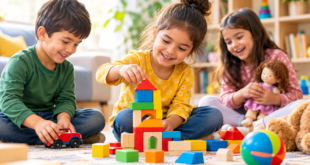


Early childhood is one of the most important stages of a child’s life. During these early years, children learn about language, emotions, relationships, movement, problem solving, and the world around them. From my point of view, parents do not need to turn their homes into classrooms to support this learning. Simple conversations, play, reading, and everyday activities can make a meaningful difference.
Parents are often a child’s first teachers. The way we talk to children, respond to their questions, encourage their curiosity, and give them opportunities to explore can shape their attitude toward learning. Early childhood learning should feel natural, enjoyable, and connected to everyday life.
In this article, I will share some simple ways parents can support early childhood learning at home while helping children develop confidence, curiosity, communication skills, and independence.
Create a Positive Learning Environment at Home
A child does not need an expensive learning room to learn effectively. A safe and comfortable space with books, toys, drawing materials, puzzles, and other age appropriate activities can provide many learning opportunities.
I believe the most important thing is to create an environment where children feel comfortable asking questions and trying new things. Parents can keep a small collection of books, building blocks, coloring materials, and simple educational toys within the child’s reach.
Children should also have opportunities to make choices. For example, allowing a child to choose which book to read or which activity to complete can help develop independence and confidence.
A positive learning environment should not focus only on academic results. It should encourage children to explore, make mistakes, ask questions, and try again.
Read With Your Child Every Day
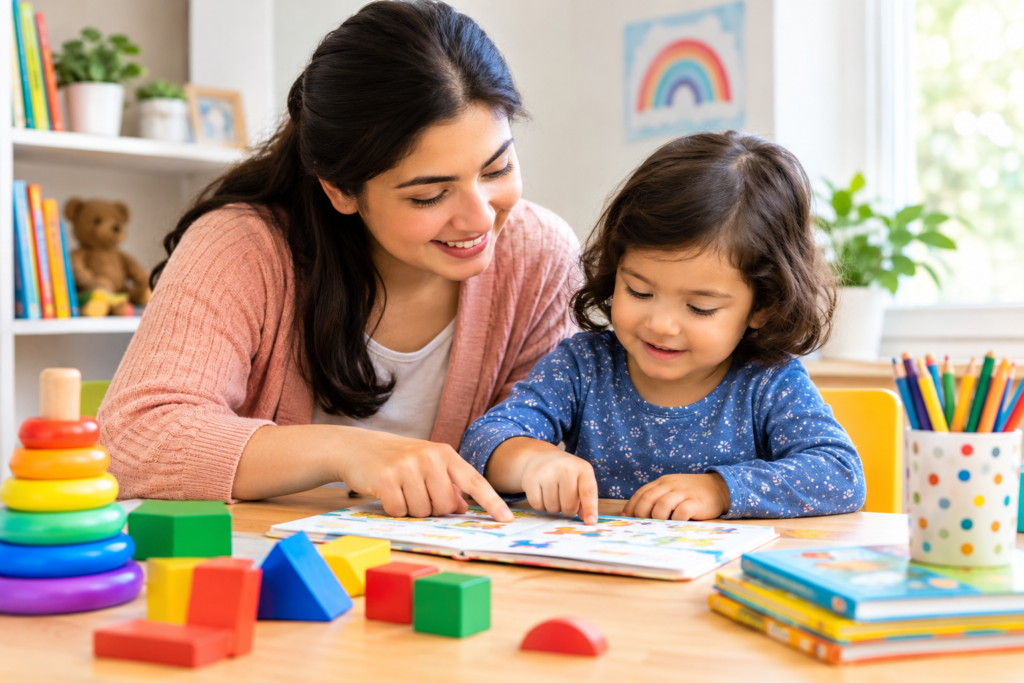
Reading is one of the easiest and most effective ways to support early childhood learning. Parents can introduce children to new words, ideas, characters, and situations through picture books and simple stories.
You do not have to spend hours reading. Even a short reading session can become a valuable part of a child’s daily routine.
While reading, parents can ask simple questions such as, “What do you think will happen next?” or “Where is the cat?” These questions encourage children to listen, think, remember information, and express their ideas.
I also think it is helpful to let children choose some of the books they want to read. A child may want to hear the same story many times, and that is perfectly normal. Repetition can help children become familiar with words, characters, sequences, and basic concepts.
Talk to Your Child Throughout the Day
Everyday conversations are an important part of early childhood development. Parents can talk to children while preparing meals, traveling, shopping, cleaning, or playing.
Instead of giving only short instructions, try having real conversations. Ask children what they see, what they think, and how they feel.
For example, while preparing food, you can talk about colors, shapes, sizes, ingredients, and numbers. While walking outside, you can discuss trees, animals, weather, vehicles, and sounds.
These simple conversations can support vocabulary and communication skills without making learning feel like a formal lesson.
Encourage Learning Through Play
Play is a natural way for young children to learn. Through play, children can practice communication, creativity, problem solving, cooperation, and physical skills.
Building blocks can introduce ideas about shapes, balance, and construction. Pretend play can help children develop language and social skills. Puzzles can encourage concentration and problem solving.
Parents do not always need to lead the activity. Sometimes it is better to watch and allow the child to take control of the play.
You can join when your child invites you or when they need help. Asking questions such as “What are you building?” can encourage them to explain their thinking.
Make Learning Part of Everyday Activities
One of my favorite ways to support early childhood learning is to use ordinary household activities as learning opportunities.
For example, parents can ask children to count toys while putting them away. They can identify colors while sorting clothes or compare sizes while organizing objects.
Cooking can also become a learning activity. Children can help measure ingredients, identify foods, observe changes during cooking, and follow simple instructions.
Gardening can introduce children to nature, plants, weather, and responsibility. Even simple activities such as watering plants can teach children about routines and caring for living things.
These experiences show children that learning is not limited to books or school.
Ask Questions That Encourage Thinking
Questions can help children develop curiosity and problem solving skills. Instead of always giving children the answer, parents can sometimes encourage them to think about possible solutions.
If a toy does not fit inside a container, for example, you can ask, “What could we try?” If a block tower falls, you might ask, “Why do you think it fell?”
The purpose is not to test the child. The purpose is to encourage them to think, experiment, and explain their ideas.
Open ended questions are especially useful because they can have many possible answers. Questions such as “What would you build?” or “What do you think happened?” give children room to use their imagination.
Encourage Drawing, Writing, and Creative Activities
Creative activities are another useful part of early childhood learning. Drawing, coloring, painting, cutting with child safe scissors, and making simple crafts can help children develop fine motor skills and creativity.
Parents should not worry too much about whether the finished picture looks perfect. Young children are learning through the process.
You can ask your child to describe their drawing or tell you a story about it. This combines creativity with language development.
Older preschool children may also enjoy practicing letters, writing their name, or making marks on paper. These activities can introduce early writing skills in an enjoyable way.
Help Children Develop Social and Emotional Skills
Early childhood learning is not only about letters and numbers. Social and emotional development is equally important.
Children need to learn how to express feelings, communicate with others, wait for their turn, share, and handle frustration.
Parents can support these skills by talking about emotions. If a child is upset, you can help them identify what they are feeling and explain that emotions are normal.
Parents can also model respectful communication. Children often learn by watching adults, so the way parents respond to disagreements and difficult situations can become an important learning experience.
Give Children Opportunities to Be Independent
Young children need opportunities to do things for themselves. Depending on their age, they may be able to put away toys, choose their clothes, carry simple items, or help with household tasks.
It can sometimes be faster for parents to do everything themselves, but giving children small responsibilities helps them practice independence.
When children complete a task, praise their effort rather than focusing only on whether everything was perfect. Saying something like, “You worked hard to finish that,” can encourage persistence.
Spend Time Outdoors
Outdoor activities can provide many learning opportunities. Children can observe nature, run, jump, climb, collect leaves, and explore their surroundings.
Parents can encourage children to notice details. You might talk about different types of plants, clouds, insects, or sounds.
Outdoor play also gives children opportunities to develop physical skills. Running, balancing, throwing, and climbing can support coordination and body awareness.
Even a short walk around the neighborhood can become an opportunity for conversation and discovery.
Limit Distractions During Learning Time
Children can find it difficult to concentrate when there are constant distractions around them. Parents can create short periods when the television and unnecessary devices are turned off.
This does not mean children can never use technology. Digital tools can be useful when they are age appropriate and used thoughtfully. However, children also need plenty of opportunities for direct interaction, movement, conversation, creative play, and exploration.
When parents spend focused time with their children, even for a short period, it can make learning more engaging.
Be Patient With Your Child
Every child develops at their own pace. Some children may speak early, while others may take longer to become confident communicators. Some may love drawing, while others prefer building, movement, or pretend play.
Parents should avoid constantly comparing one child with another.
From my perspective, patience is one of the most important things parents can provide. Instead of becoming frustrated when a child struggles, parents can offer encouragement and allow them to try again.
Learning takes time. Mistakes are a normal part of the process.
Celebrate Curiosity and Effort
Children naturally ask many questions. Sometimes the questions can feel endless, but they are an important part of learning.
When a child asks something you do not know, you can say, “I am not sure. Let’s find out together.” This shows children that adults do not need to know everything and that finding answers can be part of learning.
Parents should also recognize effort. A child who keeps trying after making a mistake is developing an important learning habit.
Simple encouragement can make children feel proud of their progress and more willing to attempt new activities.
Build a Consistent Daily Routine
A predictable routine can help young children feel secure and understand what comes next. Regular times for meals, play, reading, rest, and bedtime can provide structure.
A routine does not need to be strict. Families have different schedules and responsibilities. The goal is simply to create enough consistency for children to understand their daily activities.
A short daily reading routine, for example, can become a positive habit that supports early childhood learning over time.
Final Thoughts
Supporting early childhood learning does not require complicated teaching methods or expensive educational products. In my view, some of the best learning opportunities are already present in everyday family life.
Parents can support children by reading together, talking regularly, encouraging play, asking questions, exploring outdoors, offering creative activities, and giving children opportunities to become independent.
Most importantly, children need encouragement and a safe environment where they can be curious. When parents show genuine interest in what their children are doing, children can begin to see learning as something enjoyable rather than something they are forced to do.
Early childhood learning develops through small experiences repeated every day. A conversation at breakfast, a story before bedtime, a puzzle on the floor, or a walk outside can all become meaningful learning moments. With patience, encouragement, and consistent involvement, parents can give their children a strong foundation for future learning.
The goal is not to make childhood feel like school. The goal is to make everyday childhood experiences rich with opportunities to discover, explore, communicate, and grow.