 octopushas3hearts
Related Articles
Watching a child grow is one of the most rewarding experiences for any parent. Every day can bring something new, from learning a new word to figuring out how to build a tower with blocks. In my view, child development is not always about reaching a big milestone at a specific age. Many of the most important signs of development appear in small everyday actions that parents may easily overlook.
Children develop new skills through playing, talking, exploring, observing, and interacting with the people around them. Some children learn certain skills quickly, while others need more time and practice. This is completely normal because every child develops at their own pace.
Understanding the signs your child is developing new skills can help you notice progress, encourage learning, and create a supportive home environment. In this article, I will discuss some common signs of child development and explain how parents can support children as they continue learning.
1. Your Child Becomes More Curious
One of the clearest signs of learning and development is increased curiosity. A child who is developing new skills often wants to understand how things work.
You may notice your child asking questions such as why the sky is blue, where rain comes from, or what happens when they press a button. Younger children may simply point at objects, touch things, or repeatedly investigate the same item.
I believe curiosity is one of the most valuable qualities children can develop because it encourages them to explore their surroundings. Instead of giving an immediate answer every time, parents can sometimes ask questions back and encourage children to think.
For example, if your child asks why a toy moves, you can ask, “What do you think makes it move?” This turns an ordinary moment into a learning opportunity.
2. Your Child Learns New Words
Language development is another important sign that a child is gaining new skills. Children may begin using new words, making longer sentences, or explaining their thoughts more clearly.
You might notice that your child starts naming objects around the house, describing what they are doing, or telling simple stories about something that happened during the day.
Reading together is one of the easiest ways to support language development. Even a few minutes of reading every day can introduce children to new vocabulary and ideas.
Parents can also talk with children throughout the day. Simple conversations during meals, shopping, cooking, or outdoor activities can help children learn naturally.
3. Your Child Solves Simple Problems
Problem solving is an important part of cognitive development. A child who is learning new skills may begin finding ways to solve small challenges without immediately asking for help.
For example, your child might move a chair to reach something, try different ways to fit puzzle pieces together, or figure out how to open a container.
These moments may seem small, but they show that your child is thinking, testing ideas, and learning from experience.
Instead of solving every problem for your child, give them some time to try first. If they become frustrated, offer a small hint rather than doing the entire task for them.
4. Your Child Becomes Better at Using Their Hands
Fine motor skills involve the small muscles in the hands and fingers. Developing these skills helps children with activities such as drawing, writing, dressing, eating, and using everyday objects.
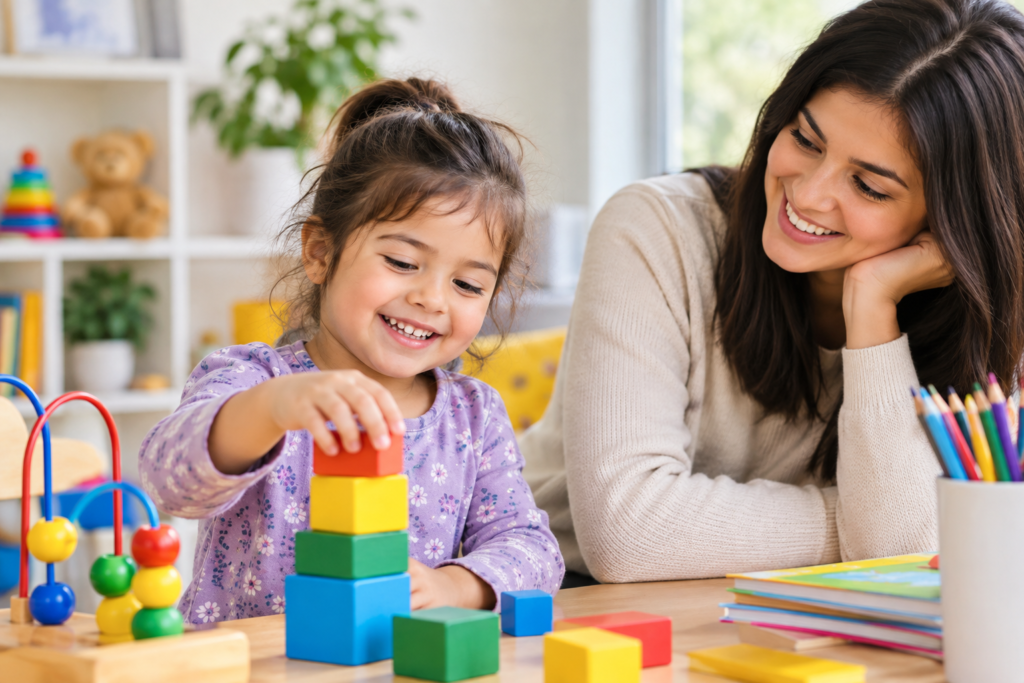
You may notice your child becoming more comfortable holding crayons, turning pages, stacking blocks, using a spoon, or putting small objects into containers.
Activities such as coloring, drawing, building with blocks, playing with clay, and completing simple puzzles can encourage fine motor development.
Parents do not need expensive educational toys to support these skills. Many simple household activities can provide useful practice when children are supervised appropriately.
5. Your Child Moves With More Confidence
Physical development is another area where parents can notice progress. Children may become more confident when walking, running, climbing, jumping, throwing, or balancing.
A child who previously needed help going up steps may gradually become more independent. Another child may learn to kick a ball or catch it with both hands.
Regular opportunities for safe physical play are important. Outdoor play, dancing, simple games, and age appropriate activities can help children develop coordination and body control.
In my opinion, physical activity should be treated as part of learning rather than something separate from education.
6. Your Child Starts Playing More Creatively
Creative play can reveal a lot about a child’s developing skills. Children often use imagination to create stories, pretend to be different characters, or turn ordinary objects into something completely different.
For example, a box might become a car, a blanket might become a tent, or a group of toys might become characters in a story.
This type of play supports imagination, communication, problem solving, and social development.
Parents can encourage creativity by providing simple materials such as paper, crayons, building blocks, books, and safe household objects. There is no need to control every part of the activity. Sometimes children learn the most when they are allowed to decide what they want to create.
7. Your Child Can Follow Simple Instructions
Following instructions is another sign of developing understanding and communication skills.
A young child may begin following one step instructions such as putting a toy away or bringing a book. With time, they may be able to follow several steps in sequence.
This skill develops gradually, so parents should keep instructions clear and appropriate for the child’s age.
Instead of giving several complicated instructions at once, start with simple directions. You can gradually increase the challenge as your child becomes more comfortable.
8. Your Child Shows More Independence
A child developing new skills often wants to do more things independently. They may want to choose their clothes, feed themselves, clean up toys, or try tasks that adults previously did for them.
Sometimes this increased independence can make daily routines take longer, but it is an important part of growing.
Parents can support this development by giving children manageable choices. For example, you might ask whether they want the blue shirt or the green shirt.
Giving children small responsibilities can help build confidence while teaching practical skills.
9. Your Child Begins Understanding Feelings
Emotional development is just as important as physical and academic development. Children gradually learn to recognize and express emotions.
You may notice your child saying that they are happy, sad, angry, scared, or excited. They may also begin noticing how other people feel.
Parents can help by giving emotions simple names. If your child looks upset, you might say, “You seem frustrated because the puzzle is difficult.”
This teaches children that feelings are normal and gives them useful words for expressing themselves.
10. Your Child Starts Sharing and Cooperating
Social skills develop through interaction with parents, siblings, friends, teachers, and other people.
A child may gradually learn to take turns, share toys, cooperate during games, or wait while another person is speaking.
These skills take time. Young children may not always want to share or cooperate, and that does not necessarily mean something is wrong.
Parents can model positive behavior by demonstrating kindness, patience, listening, and respectful communication in everyday situations.
11. Your Child Remembers More
Improved memory is another sign of learning. Your child may remember where a toy was placed, recall something that happened several days ago, or remember the words to a favorite story.
You may also notice your child remembering routines. They might know that it is time to brush their teeth after getting ready for bed or that shoes are needed before going outside.
Games involving matching, storytelling, songs, and simple memory challenges can make practicing these skills enjoyable.
12. Your Child Keeps Trying After Making Mistakes
One of the signs I find especially meaningful is persistence. A child who tries again after something goes wrong is developing an important learning skill.
Maybe a block tower falls down, a puzzle piece does not fit, or a drawing does not look the way the child expected. Instead of giving up, the child tries another approach.
Parents can encourage this attitude by praising effort rather than only praising success. Saying “You kept trying” can help children understand that mistakes are part of learning.
How Parents Can Support New Skills
The best way to support child development is often surprisingly simple. Children need opportunities to play, explore, communicate, move, and interact with caring adults.
Parents can read with their children, ask questions, listen to their stories, play simple games, encourage outdoor activities, and allow children to participate in everyday tasks.
It is also important not to compare one child with another. Development does not happen at exactly the same speed for every child. A child may be advanced in language while taking longer to develop a physical skill, while another child may show the opposite pattern.
Instead of focusing only on whether a child is ahead or behind another child, I believe it is more helpful to notice individual progress. Ask yourself what your child can do today that they could not do a few months ago.
When Parents Should Seek Professional Advice
Parents naturally notice changes in their children’s development, and most differences are part of normal variation. However, if you have concerns about your child’s development, communication, movement, behavior, hearing, vision, or ability to learn everyday skills, discussing those concerns with a qualified pediatrician or child development professional can be helpful.
Professional guidance can provide a clearer understanding of your child’s individual needs. Parents do not need to wait until a concern becomes serious before asking questions.
Final Thoughts
The signs your child is developing new skills can appear in many different ways. A new word, a better grip on a crayon, a creative game, a successful puzzle, a new ability to follow instructions, or the determination to try again can all represent meaningful progress.
From my point of view, parents do not need to turn every moment into a formal lesson. Children naturally learn through everyday experiences. Our role is to provide a safe, encouraging environment where they feel comfortable asking questions, making mistakes, trying new things, and discovering the world around them.
When parents pay attention to these small signs of child development, they can better understand their child’s progress and provide support at the right time. Most importantly, celebrating effort, curiosity, independence, creativity, and persistence can make learning a positive experience that children carry with them as they grow.
Primary SEO Keywords: signs your child is developing new skills, child development, child development milestones, signs of child development, learning skills in children, children’s development, cognitive development, language development, social skills in children, physical development in children