 octopushas3hearts
Related Articles



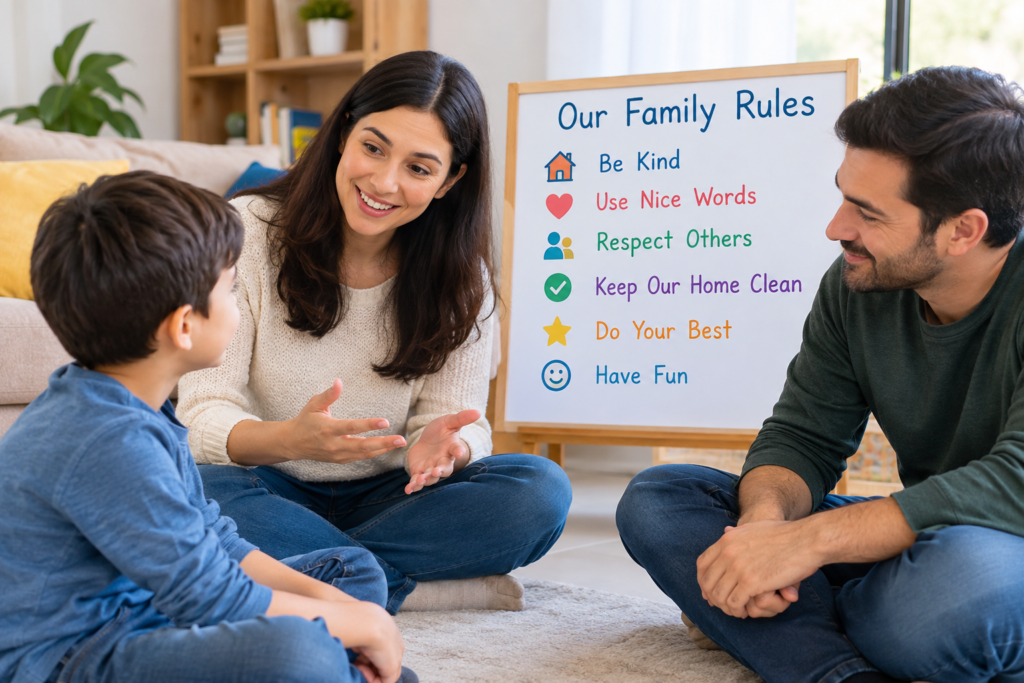
Setting clear rules for children at home is one of the most important parts of positive parenting. Children need freedom to explore, play, learn, and express themselves, but they also need boundaries that help them understand what is expected of them. In my view, clear family rules are not about controlling every action a child takes. They are about creating a safe and predictable home where children know what is acceptable and what is not.
When rules are simple, consistent, and explained with patience, children are more likely to understand them and follow them. Parents also find daily situations easier to manage because everyone knows the basic expectations.
Why Clear Rules Matter for Children
Children are still learning how the world works. They do not automatically know why they should clean their room, speak politely, finish homework, or avoid certain behaviors. Clear rules give them guidance.
I believe children feel more secure when they know what their parents expect. If the rules change every day, children can become confused. One day something may be allowed, while the next day the same behavior may result in punishment. This makes it harder for children to understand boundaries.
Clear rules can also help children develop responsibility. Instead of simply being told what not to do, they learn how their choices affect themselves and other family members.
Keep Family Rules Simple
One of the first things parents should consider is the number of rules they have. A long list of rules can be difficult for young children to remember.
Rather than creating dozens of instructions, focus on a few important family rules. For example, parents might establish rules such as:
Speak respectfully.
Keep personal belongings in their proper place.
Complete homework before recreational screen time.
Help with age appropriate household tasks.
Treat family members with kindness.
Follow safety rules.
These simple expectations are easier for children to understand and remember.
Make Rules Age Appropriate
A rule should match the child’s age and level of understanding. What works for a teenager may not work for a preschooler.
For younger children, rules should be short and concrete. Instead of saying, “You need to behave responsibly around your belongings,” a parent could say, “Put your toys back in the box after playing.”
Older children can understand more detailed expectations. They can also participate in discussions about household responsibilities, screen time, study routines, and social activities.
In my opinion, age appropriate rules are much more effective because children can actually understand what they are being asked to do.
Explain Why the Rule Exists
Children often ask, “Why?” Rather than seeing this question as disrespectful, parents can use it as an opportunity to teach.
If the rule is to wear a seat belt, explain that it helps protect everyone in the car. If the rule is to wash hands before eating, explain that clean hands help reduce the spread of germs.
When children understand the reason behind a rule, they may be more willing to follow it. They begin to see rules as useful guidelines rather than random restrictions created by adults.
Use Positive Language
The way a rule is communicated matters. Parents can often make rules easier to understand by using positive and direct language.
Instead of saying, “Don’t make a mess,” try saying, “Please put your art supplies away when you finish.”
Instead of saying, “Stop shouting,” try saying, “Please use a calm voice.”
Positive instructions tell children what they should do rather than only telling them what they should avoid.
This approach can make communication calmer and more constructive.
Involve Children in Creating Some Rules
Not every household rule needs to be decided entirely by parents. When children are old enough, they can have a voice in creating certain family expectations.
For example, parents and children can discuss rules for screen time, household chores, bedtime routines, or shared spaces.
Parents should still make the final decision when safety or important responsibilities are involved. However, allowing children to contribute can help them feel respected and responsible.
A family meeting can be a simple way to discuss these expectations. Everyone can talk about what is working, what is difficult, and whether a rule needs to be adjusted.
Be Consistent With the Rules
Consistency is one of the most important parts of setting clear rules for children at home.
If parents establish a rule but rarely enforce it, children may stop taking the rule seriously. This does not mean parents need to react strongly every time a child makes a mistake. It means the basic expectations should remain reasonably consistent.
For example, if the family rule is that homework comes before video games, parents should try to maintain that routine rather than changing it frequently.
Of course, real life can be flexible. A child may be sick, have an important family event, or face an unusual situation. Flexibility is different from having no boundaries.
Set Clear and Reasonable Consequences
Children need to understand what happens when a rule is broken. Consequences should be reasonable, related to the behavior when possible, and explained calmly.
For example, if a child repeatedly leaves toys on the floor, a parent might ask the child to put them away before starting another activity. If a child misuses a device, the parent may temporarily limit access to that device.
The goal should be teaching responsibility rather than making a child feel ashamed.
I think consequences work best when parents remain calm and avoid making them unnecessarily harsh. A child should understand what went wrong, what needs to change, and how to make a better choice next time.
Avoid Changing Rules During Anger
Parents are human, and parenting can be stressful. However, making new rules or consequences while angry can create confusion.
If a child breaks a rule, it can be helpful to pause before responding. Take a breath, think about what happened, and then explain the consequence.
This also gives children an important example. They learn that frustration does not have to lead to shouting or impulsive decisions.
Parents do not need to be perfect. If a parent reacts too strongly, it is possible to apologize and calmly revisit the situation. This can actually teach children an important lesson about taking responsibility for mistakes.
Model the Behavior You Expect
Children learn a great deal by watching adults. If parents expect children to speak respectfully, parents should try to communicate respectfully with them and other family members.
If the family rule is to keep shared areas clean, adults should also participate in keeping those areas organized.
Rules become more meaningful when children see them being practiced by the people around them.
This does not mean parents and children must have identical responsibilities. Adults naturally have different responsibilities and decision making roles. The important point is that children can see the values behind the rules in everyday family life.
Create Rules for Common Daily Situations
Some of the most useful household rules are connected to everyday routines. Parents can establish expectations for mornings, meals, homework, playtime, bedtime, and technology.
For example, a morning routine might include getting dressed, brushing teeth, eating breakfast, and preparing school materials.
A bedtime routine might include putting away toys, getting ready for bed, brushing teeth, and reading for a short time.
Having predictable routines reduces the need for parents to repeat the same instructions constantly.
Teach Safety Rules Clearly
Safety rules deserve special attention because children need to understand which boundaries are not negotiable.
Depending on their age, children may need rules about crossing roads, using kitchen equipment, handling household items, interacting with strangers, swimming, using the internet, and riding in vehicles.
Safety instructions should be specific. “Be careful” is less useful than “Hold an adult’s hand when crossing the road.”
Parents should also revisit safety rules as children grow because their abilities and environments change.
Praise Children When They Follow Rules
Setting rules is not only about correcting unwanted behavior. Parents should also recognize children when they make good choices.
A simple statement such as, “I noticed you put your toys away without being reminded,” can reinforce responsible behavior.
Specific praise is often more useful than general praise because it tells children exactly what they did well.
Positive attention can encourage children to repeat helpful behaviors and can make family rules feel like shared expectations rather than constant criticism.
Review and Adjust Family Rules
Family life changes as children grow. A rule that works for a five year old may not be appropriate for a twelve year old.
Parents should occasionally review their household rules and ask whether each one is still necessary and realistic.
Children also become more independent with age. As their ability to make decisions develops, parents can gradually give them more responsibility.
For example, an older child may eventually manage their own homework schedule or organize their room without constant reminders.
The purpose of clear rules is not to keep children dependent on parents. It is to help children gradually develop self discipline and good judgment.
Final Thoughts
Learning how to set clear rules for children at home takes patience, consistency, and flexibility. In my view, the most effective family rules are simple, understandable, age appropriate, and connected to everyday life.
Parents should explain why rules matter, involve children when appropriate, model the behavior they expect, and use reasonable consequences when boundaries are ignored. At the same time, children should receive encouragement when they make responsible choices.
A peaceful home does not require perfect children or perfect parents. It requires clear expectations, respectful communication, and a willingness to teach children through everyday experiences. When children understand the rules and know that their parents are consistent and supportive, they can gradually learn to make responsible decisions on their own.
That is ultimately what good household rules should accomplish: not simply getting children to obey, but helping them develop respect, responsibility, self control, and confidence as they grow.